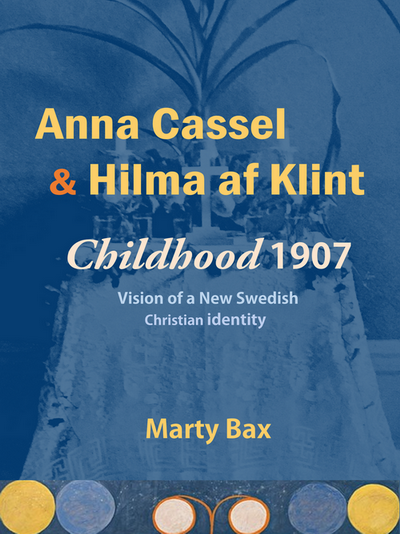
In December 1907 Hilma af Klint and the group De Fem finished the of a series of ten paintings, called In December 1907 Hilma af Klint and the group De Fem finished the of a series of ten paintings, called De tio största (The Ten Largest). Its iconographical richness defies any simple explanation. Descriptions in literature are mainly descriptive in character and interpretations are based on how Hilma af Klint is seen: as a pioneer of Occult abstraction. Hilma was part of the women’s group De Fem, consisting of five members: a medium, a psychographer and three painters. The notebooks of De Fem paint a completely different picture than commonly accepted: it was Anna Cassel who was commissioned to develop the concept of all of the work. This book analyzes Anna’s assignment on the basis of the first painting on the Ten Largest: Childhood. Surprisingly, the painting symbolizes the ‘childhood’ of the modern Christian identity of the young, newly formed Swedish State in 1905.